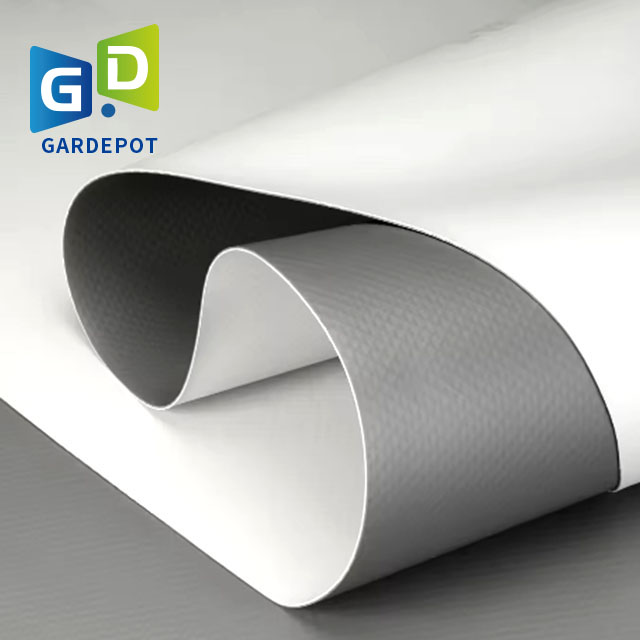
Industry trend, in a nutshell: lighter plates with sharper engagement geometry, better corrosion protection, and cleaner stamping. Actually, project specs are tougher now—FM wind uplift, salt-spray resistance, and traceable QA—but procurement still wants sane lead times and customization.
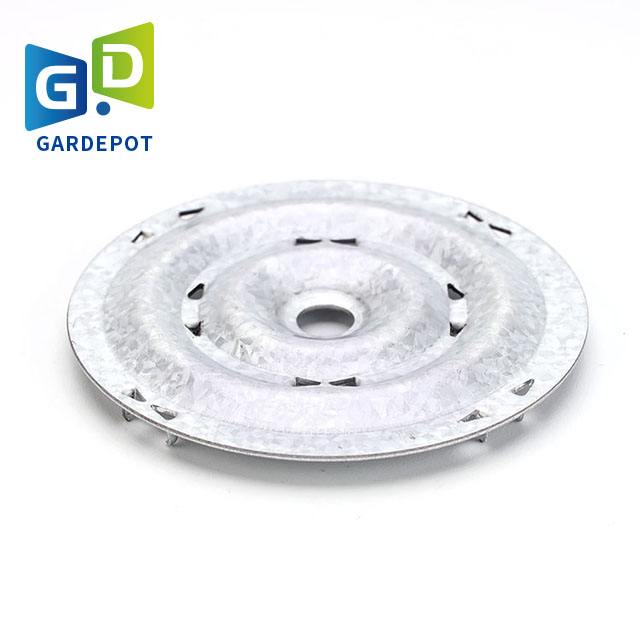
Product snapshot: 2-3/8 Barbed Metal Plate
Origin: Room 1314, Block A, Huaye Building, No. 388 Xinhua Road, Qiaoxi District, Shijiazhuang, Hebei. In field use, these compact plates pair with #12–#14 roofing screws or concrete anchors, depending on substrate. For wind zones 3–4, designers often mix compact plates under field boards and larger 3 Round Insulation Plates at perimeters/corners. It seems that blend keeps costs steady without sacrificing uplift resistance.
| Parameter | Typical Value (≈ / around) |
| Outside diameter | 2-3/8 in (≈60 mm); optional 3 in for 3 Round Insulation Plates |
| Material | High-quality galvanized steel, G90 / Z275 or better |
| Thickness | ≈0.40–0.50 mm (real-world use may vary) |
| Coating | Zinc; optional passivation / epoxy topcoat |
| Center hole | Fits #12–#14 fasteners; custom diameters on request |
| Pull-through (polyiso) | ≈600–900 N with compatible screws (system-dependent) |
| Service life | 20–30 years; higher with enhanced coating |
Process & quality flow
Materials are coil-fed, stamped, and barb-formed, then de-burred, passivated, and coated. Routine tests include salt-spray (ISO 9227/ASTM B117), dimensional checks, and plate-to-board pull-through under FM 4470/ANSI/SPRI FX-1 style protocols. I guess the quiet hero here is consistent stamping—less burr means fewer membrane scuffs.
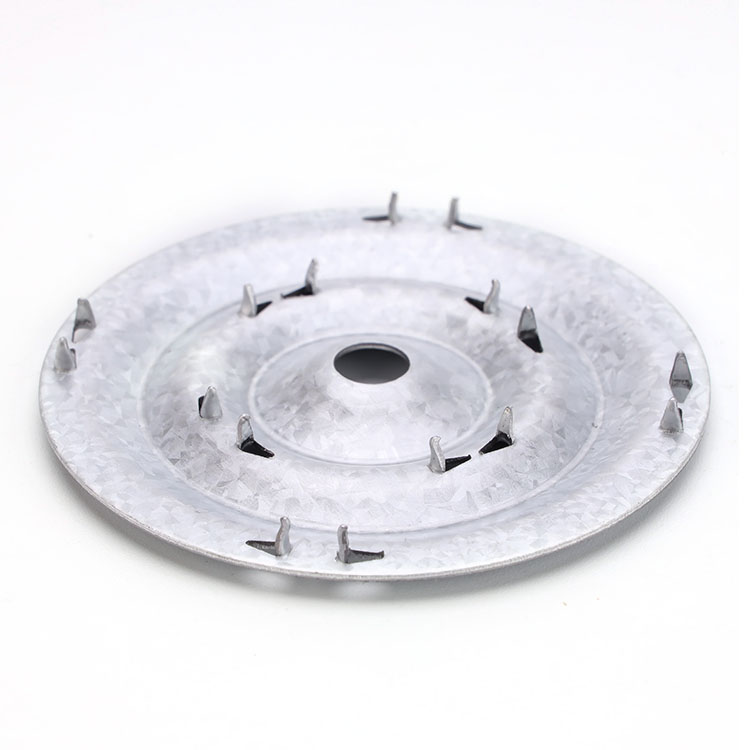
Where they’re used
- Low-slope roofing: polyiso, EPS, XPS, mineral wool.
- Exterior wall insulation systems; sheathing-to-stud reinforcement.
- Cold storage interiors (favor epoxy-coated plates).
- Retrofits where lighter plates speed layout.
Vendor snapshot (informal field view)
| Vendor | Plate OD | Coating | Certs/Notes | Lead time | Price |
| Gardepota | 2-3/8 in; 3 in 3 Round Insulation Plates optional | G90; epoxy upgrade | ISO 9001; FM-tested in assemblies | ≈2–4 weeks | $$ (balanced) |
| Generic Importer | 2.5–3 in | Basic zinc | Batch QA varies | ≈4–8 weeks | $ |
| Local Fabricator | Custom | Galv. or paint | Fast prototypes | ≈1–2 weeks | $$$ |
Customization
Dimensions (2-3/8, 3, 3.5 in), hole diameters, private labeling, and epoxy color-coding are common. For coastal projects, I’d pick epoxy topcoat plus thicker zinc. For cold rooms, smooth edges help protect facers.
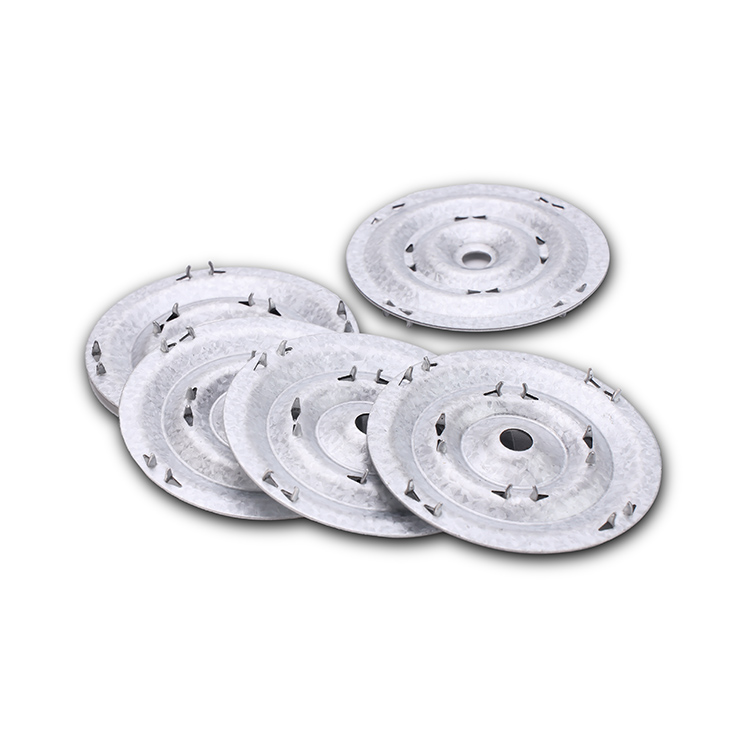
Mini case notes
1) Gulf roof retrofit: Switching field fasteners to 2-3/8 plates and perimeter to 3-in 3 Round Insulation Plates cut hardware weight ≈12% while passing FM 1-90 uplift in mock-up. 2) Food plant cold storage: epoxy-coated plates reduced corrosion spotting after 500 h salt-spray versus bare G60 in the test lab.
Standards & testing (what specifiers ask)
- FM 4470 roof assembly uplift (system-level).
- ANSI/SPRI FX-1 wind design for fasteners/plates.
- ASTM B117 / ISO 9227 salt spray for coating endurance.
- EN 14566 guidance for mechanical fasteners (contextual).
Citations: [1] FM 4470; [2] ANSI/SPRI FX-1; [3] ASTM B117; [4] ISO 9227; [5] EN 14566.
- FM Approvals 4470: Approval Standard for Single-Ply, Built-Up Roofs and Liquid Applied Roof Assemblies.
- ANSI/SPRI FX-1: Wind Design Standard Practice for Factory-Made Fasteners and Plates.
- ASTM B117: Standard Practice for Operating Salt Spray (Fog) Apparatus.
- ISO 9227: Corrosion tests in artificial atmospheres — Salt spray tests.
- EN 14566: Mechanical fasteners for gypsum plasterboard systems — Definitions, requirements and test methods.