

Selecting the right partner among domestic hex nut manufacturers is a critical decision for engineering projects where structural integrity is non-negotiable. Hex nuts, while appearing simple, are precision-engineered components that ensure the security of bolted joints across construction, automotive, and industrial machinery. This guide examines the technical requirements and procurement standards necessary to secure high-performance fasteners that meet stringent industrial codes.
In the B2B landscape, the focus has shifted from simple cost-per-unit to total cost of ownership, where the reliability of the material and the precision of the thread determine the long-term safety of an installation. For companies requiring stainless steel or carbon steel solutions, understanding the nuances of manufacturing tolerances and coating processes is essential to prevent premature failure, such as galling or atmospheric corrosion, which can lead to expensive downtime and structural risks.
Readers will discover a comprehensive framework for evaluating fastener suppliers, focusing on material certifications, automatic machinery capabilities, and the strategic importance of customized solutions. By analyzing the intersection of material science and production efficiency, this article provides procurement managers and engineers with the tools to verify supplier competence and ensure that every component integrates seamlessly into their specific operational environment.
Fastener Procurement Fundamentals
The procurement of industrial fasteners requires a deep understanding of the relationship between the nut, the bolt, and the environment in which they operate. A domestic hex nut manufacturers partner must not only provide the physical part but also the technical assurance that the part adheres to international standards such as ASTM or DIN. The fundamental challenge in sourcing lies in balancing the mechanical properties—such as yield strength and hardness—with the chemical resistance required for the specific application, whether it be in high-humidity coastal areas or high-temperature industrial plants.
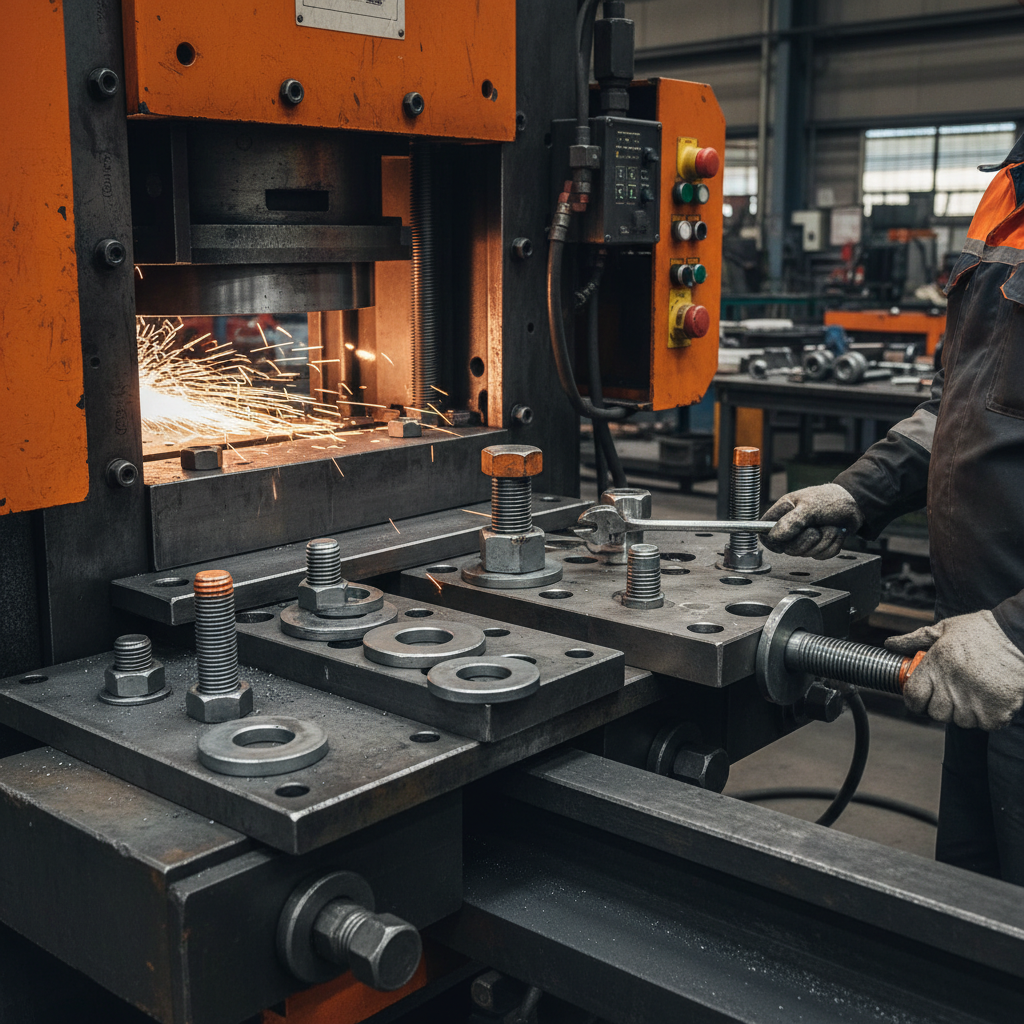
Modern manufacturing has evolved to utilize high-precision automatic machinery to ensure consistency across millions of units. This automation reduces human error in thread forming and dimensional accuracy. For professional buyers, the focus should remain on the supplier's ability to integrate R&D with production, allowing for the development of specialized fasteners that can withstand unique stresses. When evaluating a supplier, the evidence of their quality management system and their transparency regarding raw material sourcing are the most reliable indicators of future product performance.
Evaluating Hex Nut Production Quality
Assessing a supplier's capability involves analyzing several technical dimensions. It is not enough to review a product catalog; one must examine the production logic, the materials utilized, and the post-processing treatments that define the component's lifespan.
Material Selection Criteria
The choice of material determines the nut's load-bearing capacity and environmental resilience. Stainless steel is preferred for corrosion resistance, while carbon steel offers higher strength for heavy-duty structural applications. Bimetal options may be utilized for specific galvanic compatibility needs. Hebei Gardepot Technology, for instance, leverages diverse materials including stainless and carbon steel to meet varying industry demands.
| Material Type | Key Property | Primary Application | Evaluation Focus |
|---|---|---|---|
| Stainless Steel | High Corrosion Resistance | Marine & Food Processing | Grade (304/316) |
| Carbon Steel | High Tensile Strength | Heavy Construction | Heat Treatment Level |
| Bimetal | Hybrid Properties | Specialized Engineering | Interface Bonding |
| Alloy Steel | Extreme Durability | Automotive/Aerospace | Hardness Consistency |
| Galvanized Steel | Oxidation Protection | Outdoor Infrastructure | Coating Thickness |
| Custom Alloys | Specific Performance | R&D Prototypes | Chemical Composition |
Precision Threading Standards
Threading accuracy is the most critical factor in ensuring a secure fit and preventing vibration-induced loosening. Suppliers utilizing advanced automatic machinery can achieve tighter tolerances, reducing the risk of cross-threading. The focus should be on the "fit class" of the thread, ensuring that the nut matches the bolt's tolerance perfectly to maintain the required clamping force throughout the lifecycle of the assembly.
Corrosion Resistance Coatings
Surface treatments are essential for extending the life of fasteners in harsh environments. Options such as Oil Rubbed Bronze, Ruspert, Galvanized, and Aluminum-magnesium coatings provide varied levels of protection. The selection depends on the exposure level; for example, aluminum-magnesium coatings are highly effective for high-salinity environments, whereas electrophoresis is often used for a balance of aesthetics and protection.
Customization Capabilities
Standard sizes do not always fit specialized machinery. The ability of a manufacturer to provide customized dimensions, materials, and coatings is a significant competitive advantage. This requires a supplier that integrates product development with manufacture, allowing them to iterate on designs based on customer-specific technical drawings and operational requirements.
Quality Control Protocols
Consistent quality is achieved through rigorous testing. This includes dimensional inspection via calibrated instruments, hardness testing, and salt spray tests to verify coating durability. A reliable supplier provides comprehensive material certifications and test reports, ensuring that the batch received matches the technical specifications requested during the procurement phase.
Supply Chain Stability
In B2B operations, timely delivery is as important as product quality. Lead time considerations, production capacity, and the ability to scale output during project peaks are vital. Suppliers with self-developed equipment and established partner networks are typically more resilient to market fluctuations and raw material shortages, ensuring a steady flow of components.
Cost vs. Lifecycle Value
While initial procurement costs are a factor, the real value is found in the reduction of maintenance and replacement costs. A higher-grade fastener with a superior coating may cost more upfront but prevents structural degradation and costly replacements over ten years. Analyzing the "cost per year of service" is the most professional approach to fastener procurement.
FAQ
What is the main difference between stainless steel and carbon steel hex nuts?
Stainless steel nuts provide superior resistance to corrosion and oxidation, making them ideal for wet or chemically active environments. Carbon steel nuts generally offer higher tensile strength and are more cost-effective for structural applications where corrosion is managed through coatings like galvanization. The choice depends on whether the priority is atmospheric endurance or mechanical load capacity.
How do I verify the quality of a fastener supplier?
Verify the supplier by requesting material test reports (MTRs), checking for adherence to international standards (e.g., ISO, DIN, ASTM), and auditing their quality control process. Look for evidence of automatic machinery usage, which ensures dimensional consistency, and verify if they provide specific certifications for their coating processes to ensure corrosion resistance claims are accurate.
What coatings are best for outdoor construction fasteners?
For outdoor use, Hot-Dip Galvanized or Aluminum-magnesium coatings are highly recommended due to their ability to create a thick, sacrificial protective layer. Ruspert coatings are also an excellent choice for high-corrosion environments. The selection should be based on the specific environmental exposure, such as proximity to saltwater or industrial pollutants.
Can hex nuts be customized for specific industrial needs?
Yes, professional manufacturers can customize fasteners in terms of material composition, thread pitch, dimensions, and surface finishes. Customization is often necessary for specialized machinery or when adhering to unique engineering blueprints. Suppliers with integrated R&D capabilities are best suited to handle these bespoke requirements.
What causes hex nuts to fail or strip during installation?
Common causes include thread mismatch, over-torquing beyond the material's yield strength, and the use of incorrect materials for the environment (leading to corrosion). In stainless steel, "galling" (cold welding) is a common issue; this can be mitigated by using anti-seize lubricants or selecting nuts with specific surface treatments.
How does automatic machinery improve fastener quality?
Automatic machinery eliminates the variability associated with manual production. It ensures that every nut is formed with the exact same pressure and temperature, resulting in consistent thread profiles and dimensional accuracy. This high level of repeatability is essential for large-scale industrial projects where thousands of components must be interchangeable.
References and further reading
- International Organization for Standardization (ISO) - Fasteners Standards for Mechanical Engineering.
- ASTM International - Standard Specifications for Machine Screws, Bolts, Nuts, and Lag Screws.
- Industrial Fasteners Handbook - Material Science and Threading Technology.
Related Articles






 English
 Arabic
 Dutch
 French
 German
 Greek
 Hungarian
 Indonesian
 Italian
 Japanese
 Korean
 Polish
 Portuguese
 Spanish
 Swahili
 Swedish
 Thai
 Turkish
 Ukrainian
 Urdu