Insulated Metal Plates, Field Notes and Real-World Specs
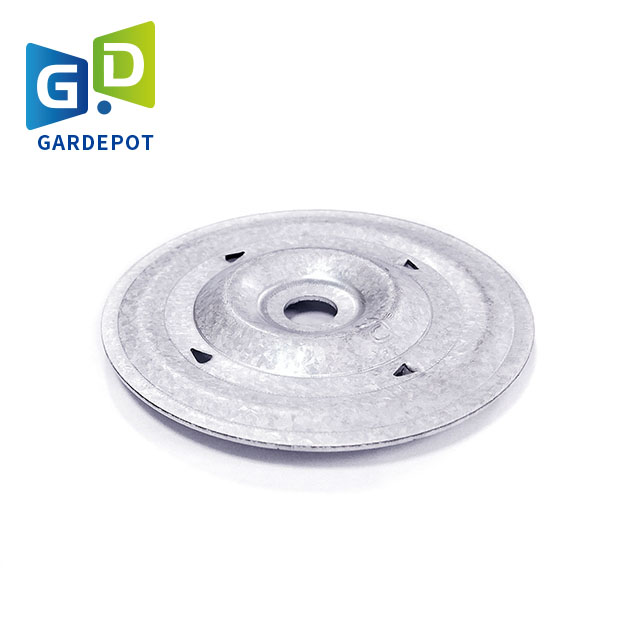
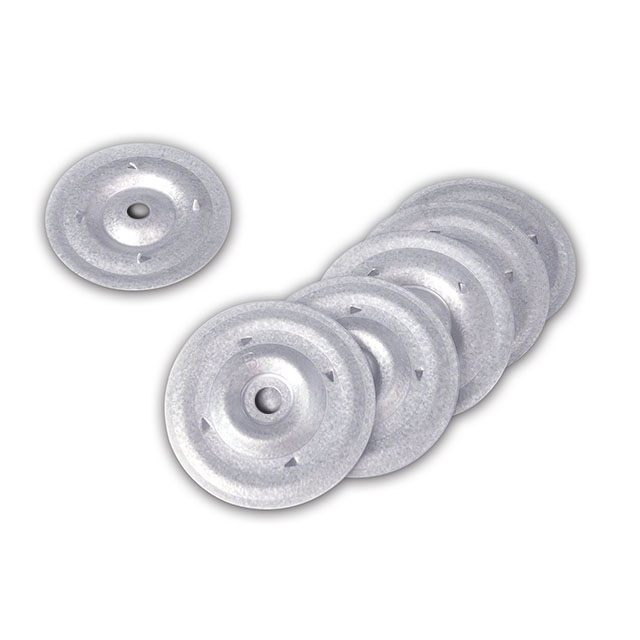
If you’ve spent time on a roof in winter, fingertips going numb while the crew pushes production, you already know the right insulated metal plate can make or break the schedule. The 2” Barbed Plate from Gardepota (origin: Room 1314, Block A, Huaye Building, No. 388 Xinhua Road, Qiaoxi District, Shijiazhuang, Hebei) is one of those deceptively simple parts that, surprisingly, sets the tone for quality and wind uplift performance.
What’s trending (and why induction matters)
Two shifts are clear on commercial roofs: more induction-welded attachment and less thermal bridging. Induction welding lets you bond the membrane to the plate without extra penetrations at the surface—fewer cold bridges, fewer potential leak paths. Contractors tell me they like the speed; specifiers like the clean uplift numbers. To be honest, I used to be skeptical. But on windy sites, it’s a lifesaver.
Product snapshot: 2” Barbed Plate
| Item | Spec (≈, real-world may vary) |
| Diameter | 2 in (≈50 mm) |
| Material | G90 galvanized steel; 304 SS optional for coastal/corrosive zones |
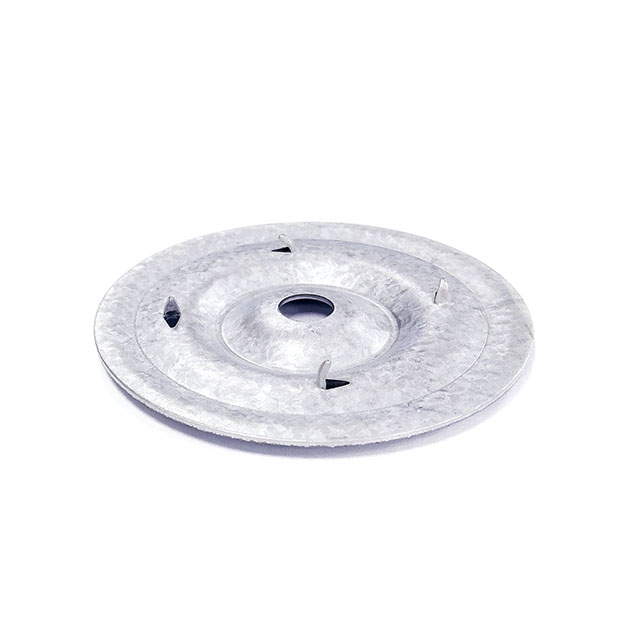
| Barb design | Multi-tooth profile for membrane capture under induction heating |
| Coating | Zinc or polymer topcoat; salt-spray ≈ 240–500 h (ASTM B117/ISO 9227) |
| Compatibility | TPO (ASTM D6878), PVC (ASTM D4434); induction welders from major OEMs |
| Pull-through/uplift | Assembly-dependent; often supports FM 1-60 to 1-120 layouts when spaced per test |
| Service life | 20–30 years in typical roof assemblies (environment-dependent) |
Process flow, testing, and standards
Materials arrive as coil steel, then stamping, barb forming, deburring, and coating/plating. Induction weld plates are batch-checked for dimensions, barb height, hardness, and coating thickness. Typical verifications include:
- Salt spray: ASTM B117 / ISO 9227
- Roof uplift: UL 1897 or FM 4470 assembly tests (fixture-specific)
- Membrane bonding checks: peel/shear with TPO/PVC laps (lab protocols)
In field use, a insulated metal plate sits beneath the membrane; the induction tool heats the plate through the sheet, the hot-melt layer fuses, and—click—the barb profile locks things down.
Where they’re used (and why crews like them)
- Big-box retail, logistics roofs, cold storage, and data centers
- Over steel deck or concrete with insulation boards (Polyiso, EPS, mineral wool)
- Advantages: fewer membrane penetrations, faster layout, lower thermal bridging, tidy wind maps
Vendor comparison at a glance
| Vendor | Lead Time | MOQ | Customization | Certs | Price |
| Gardepota 2” Barbed Plate | ≈ 2–4 wks | 5k–10k pcs | Material, coating, logo, pack | Factory ISO 9001; assembly tests on request | $$ |
| Vendor A (Domestic) | ≈ 1–2 wks | 1k–5k pcs | Limited | FM/UL assembly listings available | $$$ |
| Vendor B (Aggregator) | ≈ 4–6 wks | 10k+ pcs | Varies by batch | Mixed | $–$$ |
Customization notes
Barb profile, stainless option, 2–3 in diameters, and color-marked coatings are common requests. Installers say a colored dot helps crews spot each insulated metal plate during QC scans—tiny tweak, big field win.
Mini case study
A Midwestern logistics roof (≈110,000 ft²) swapped traditional screws/plates for induction. Using the 2” Barbed Plate, the layout met FM 1-90 with fewer fastener rows; crew reported ≈35% fewer membrane penetrations and a quieter install on windy afternoons. The superintendent joked the biggest change was “less chasing plates across the deck.” I guess that counts as customer feedback.
Bottom line
If you’re engineering for uplift and longevity, a well-made insulated metal plate is a small line item with outsized impact. Check assembly listings, ask for lab data, and—actually—run a field mockup before you buy big.
Authoritative citations
- FM Approvals 4470: Single-Ply, Polymer-Modified Bitumen Roof Systems – https://www.fmglobal.com/research-and-resources/fm-approvals
- UL 1897: Uplift Tests for Roof Covering Systems – https://standardscatalog.ul.com
- ASTM B117 / ISO 9227: Salt Spray (Fog) Testing – https://www.astm.org/b0117 and https://www.iso.org/standard/9227.html
- ASTM D6878 (TPO) and ASTM D4434 (PVC) – Roofing Membrane Material Standards – https://www.astm.org