2-3/8 Barbed Plate: A Field Guide to Modern Roof Insulation Fastening
If you specify or buy insulation fastening plates, you already know the market has shifted. Induction-weld systems are everywhere, wind maps keep tightening, and buyers want fewer penetrations with more uplift capacity. Frankly, it’s a good time to be picky about plates.
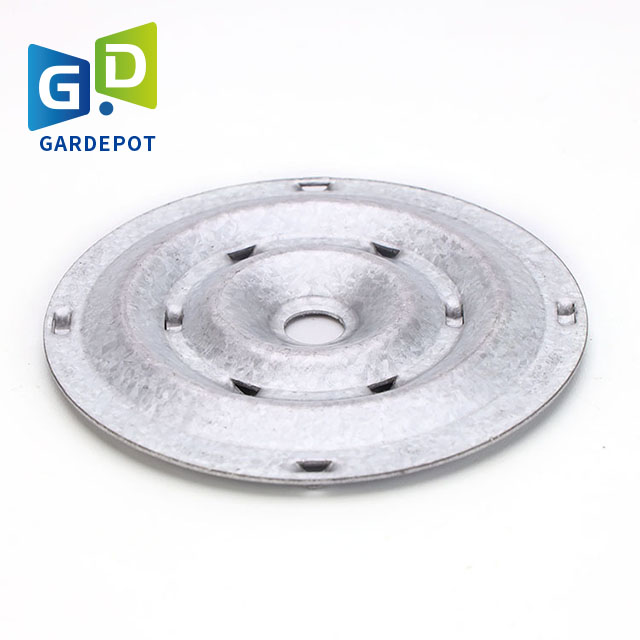
What’s special about the 2-3/8 Barbed Plate?
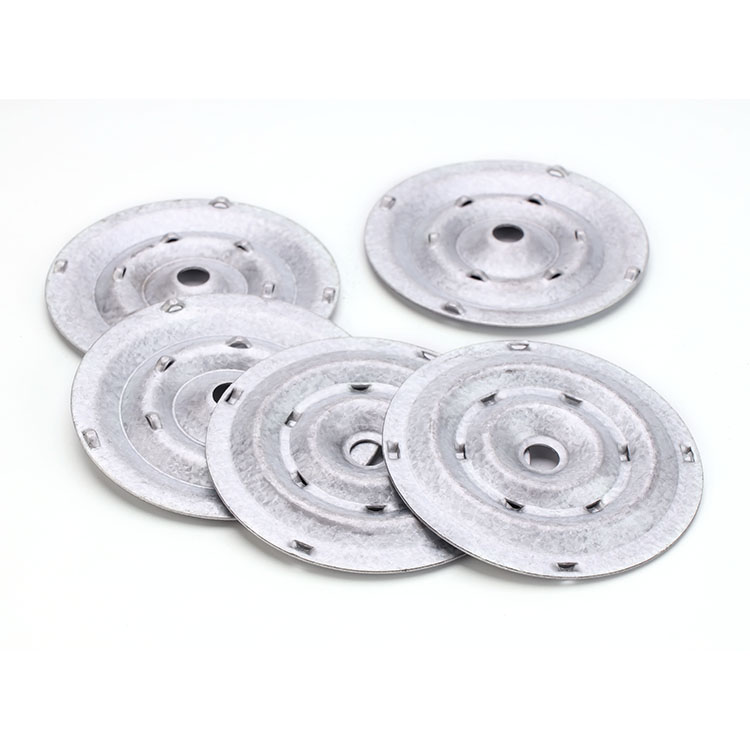
This plate is designed for mechanical fastening and induction welding workflows. It’s a stamped, high-strength steel disc with micro-barbs that bite into the insulation facer. In induction setups, a polymer/E-coat layer couples with the roofing membrane’s coated plate zone for a clean, fused bond—fewer screws through the membrane, fewer leak paths. Many contractors tell me the crew learning curve is short; productivity ticks up after day two.
Product snapshot and key specs
| Model | 2-3/8 Barbed Plate (≈ 60 mm) |
| Material | High-strength steel, G90 zinc or E-coat (induction-ready) |
| Thickness | ≈ 0.6–0.8 mm (real-world use may vary by lot/spec) |
| Fastener compatibility | No. 12 / No. 14 roofing screws; steel, wood, or concrete decks |
| Corrosion performance | ASTM B117: G90 ≈ 350–500 h; E-coat ≈ 1,000+ h |
| Service life | 20–30 years when installed per system approvals |
| Origin | Room 1314, Block A, Huaye Building, No. 388 Xinhua Road, Qiaoxi District, Shijiazhuang, Hebei |

Where they shine
- High-wind commercial roofs (FM 1-90/1-120 assemblies)
- Retrofits over steel decks where fewer membrane penetrations are a must
- Cold storage and data centers (less thermal bridging vs. dense screw patterns)
- Coastal jobs—E-coat helps fight salt-spray corrosion
Contractor feedback? “Less walk-off, better facer grip,” one superintendent told me in Jacksonville. Another said induction reduced detailing headaches around skylights. To be honest, that tracks with what I see on wind-exposed big boxes.
Process flow and quality checkpoints
- Material: coil-fed HSLA or low-carbon steel.
- Stamping: precision die forms barbs and dome to resist pull-through.
- Coating: G90 galvanizing or E-coat/polymer for induction coupling.
- Testing: pull-through on faced polyiso (per FM/ANSI methods), salt-spray to ASTM B117, weld strength checks for induction plates, dimensional gauges.
- Approvals: used within FM 4470-approved assemblies; factory QMS typically ISO 9001.
Vendor comparison (field-notes version)
| Vendor | Coating | Approvals | Lead time | MOQ | Notes |
|---|---|---|---|---|---|
| Gardepota 2-3/8 Barbed Plate | G90 or E-coat (induction-ready) | Fits FM-approved assemblies (verify system file) | ≈ 2–4 weeks | Around 10k pcs | Custom stamping/branding available |
| Generic Importer A | Zinc only | Limited paperwork | ≈ 6–8 weeks | High | Cost-first; watch tolerance drift |
| Tier-1 Brand B | E-coat/polymer | FM files published | ≈ 1–3 weeks | Moderate | Premium price; strong tech support |
Customization and integration
Branding stamps, alternate coatings, and deck-specific hole patterns are common requests. For induction work, confirm compatibility with your tool set (e.g., OMG-style or equivalent) and membrane chemistry. And, yes, stock a few extra insulation fastening plates for corner enhancements—wind zones don’t play nice.
Mini case studies
- Big-box retrofit, Texas Panhandle: induction with 2-3/8 plates cut fastener count ≈ 35%, still met FM 1-120. Crew said heat-weld cues were easy to read.
- Coastal distribution hub, New Jersey: E-coated insulation fastening plates showed no red rust after year-one inspection; fastener heads remained bright.
Standards, tests, and paperwork to ask for
- FM 4470 uplift approvals (system files), ANSI/SPRI FX-1 (fastener/plate evaluation)
- ASTM B117 salt-spray, ASTM E1592 uplift (where applicable)
- ISO 9001 factory certificate; UL or local codes per membrane assembly
Actually, documentation is half the battle. Keep it tidy; your AHJ and insurer will thank you.
Final takeaway
If you want consistent facer bite, clean induction welds, and fewer penetrations, the 2-3/8 Barbed Plate is a solid, no-drama choice among insulation fastening plates. Price matters, of course—but so does a roof that stays put when the forecast gets weird.
References
- FM Approvals Standard 4470: Single-Ply, Polymer-Modified Bitumen Sheet, Built-Up Roof (BUR) and Liquid Applied Roof Assemblies.
- ASTM B117: Standard Practice for Operating Salt Spray (Fog) Apparatus.
- ANSI/SPRI FX-1: Standard Field Test Procedure for Determining the Withdrawal Resistance of Roofing Fasteners.
- ASTM E1592: Standard Test Method for Structural Performance of Sheet Metal Roof and Siding Systems by Uniform Static Air Pressure Difference.
- ISO 9001: Quality Management Systems — Requirements.