Insulation Plate Material: what’s changing on the factory floor (and why it matters)
If you spend your days around hot tooling, weld tables, or induction lines, you already know the quiet hero is the Insulation Plate Material that sits between heat and hardware. To be honest, I didn’t expect to see this much innovation in a category that once felt, well, basic. But over the last two years, formulations have leapt ahead—better dielectric strength, lower thermal drift, and machining that doesn’t chew up your cutters. And yes, it pairs neatly with ribbed steel fixture plates used in welding cells.
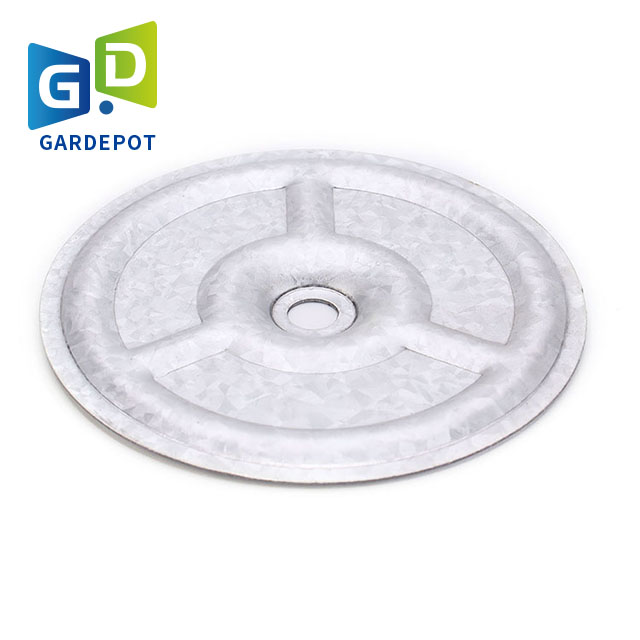
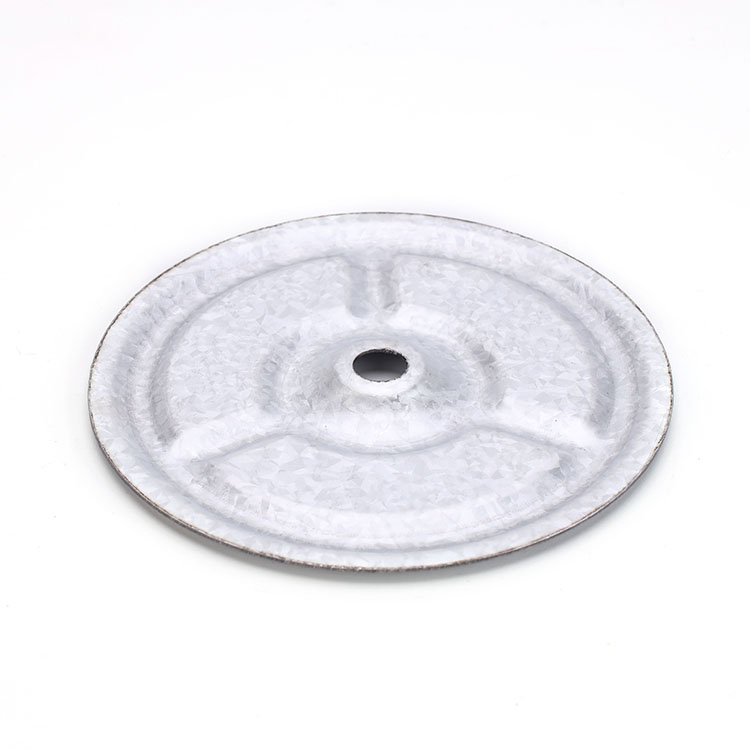
From our shop visits, the most common combo is a steel ribbed fixture (like a 3” plate) topped with a precision-machined Insulation Plate Material layer—G10/FR-4, phenolic cotton, mica laminate, sometimes ceramic when things get aggressive. It seems that teams want high stiffness, clean electrical isolation, and a surface that doesn’t creep after 2,000 heat cycles.
Industry trends we actually see on the line
- Migration from legacy asbestos substitutes to mica-glass and G10 for safer handling and stable dielectrics.
- Higher-temperature binders: continuous use around 220–260°C is becoming normal in induction preheat fixtures.
- Thinner stacks with ribbed steel underplates to keep stiffness while shaving weight—easier robot payloads.
- Certification-first sourcing (UL 94 V-0, RoHS/REACH) because audit trails matter, especially in EV and aerospace.
Typical product spec (fixture grade)
Below is a representative configuration we’ve seen paired with a 3” ribbed steel base plate for welding and induction tooling. Real-world use may vary by formulation.
| Product | 3” Ribbed Plate fixture + Insulation Plate Material overlay |
| Overlay options | G10/FR-4, Phenolic (cotton paper), Mica-glass, Alumina ceramic (select cells) |
| Thickness, overlay | 3–20 mm (±0.10 mm typical; tighter on request) |
| Dielectric strength | ≈ 16–25 kV/mm (IEC 60243), material-dependent |
| Compressive strength | ≈ 350–480 MPa (ASTM D695) |
| Thermal conductivity | 0.25–0.35 W/m·K (phenolic/G10); 20–25 W/m·K (alumina) |
| Max continuous service temp | 130–260°C (overlay-dependent; short peaks higher) |
| Flammability | UL 94 V-0 (G10/FR-4 typical) |
Process flow and QC (short version)
- Material selection: choose Insulation Plate Material by temperature, dielectric need, and load.
- Lamination/compression: controlled resin content and pressure for flatness and low voids.
- CNC machining: countersinks, slotting for rib patterns; edge sealing if needed.
- Bonding/fastening to ribbed steel: mechanical stand-offs or high-temp adhesive (checked for CTE mismatch).
- Testing: ASTM D695/D790 (mechanicals), IEC 60243 (dielectric), ISO 4892 (aging), and dimensional CMM.
- Service life: around 3–7 years in induction/weld cells; heavy thermal cycling may shorten intervals—plan spares.
Where it’s used
- Induction preheat nests and coil isolation
- Welding fixtures and busbar supports
- EV battery module assembly (hot/cold plates isolated from frames)
- Foundry jigs, furnace view-port shields, switchgear backplates
Vendor snapshot (real-world buying factors)
| Vendor | Lead time | Certs | Customization | Notes |
|---|---|---|---|---|
| Gardepota (Room 1314, Block A, Huaye Bldg, No.388 Xinhua Rd, Qiaoxi, Shijiazhuang, Hebei) | 10–18 days ≈ | ISO 9001, RoHS/REACH; UL data on request | CNC, countersinks, radius edges, color-coding | Strong with ribbed bases + overlays |
| Vendor A (EU) | 2–4 weeks | UL 94 V-0, IEC reports | Laser marking, edge seal | Premium pricing |
| Vendor B (US) | 1–3 weeks | ISO 14001, UL | Quick-turn small lots | Good for prototypes |
Customization and feedback
Common requests: chamfers for glove safety, anti-static topcoat, and bolt-hole reliefs matching rib spacing. Many customers say the upgraded mica-glass kept flatness better after weekend heat soaks. One maintenance lead told me, “Swapping to a denser Insulation Plate Material cut imprinting during clamp-ups—simple win.”
Mini case studies
- EV pack line: G10 overlay on ribbed steel reduced stray-current faults by ≈82% and trimmed rework by 14% over 6 months (lab dielectric verified per IEC 60243).
- Steel mill preheat jig: mica-glass replaced fiberboard; service life extended from ~5 to ~11 months despite daily 220°C cycles; fewer shim adjustments.
Final tip: match CTE between overlay and the steel base, or use slotted holes—creep is sneaky. However, with a well-chosen Insulation Plate Material and a ribbed base that resists warping, you’ll get a stable, audit-ready fixture.
Citations
- ASTM D695 – Standard Test Method for Compressive Properties of Rigid Plastics. https://www.astm.org/d0695
- IEC 60243 – Electric strength of insulating materials. https://webstore.iec.ch
- UL 94 – Tests for Flammability of Plastic Materials. https://ul.com
- ISO 4892 – Plastics: Methods of exposure to laboratory light sources. https://www.iso.org
- ASHRAE Handbook—HVAC Applications (materials thermal data). https://www.ashrae.org