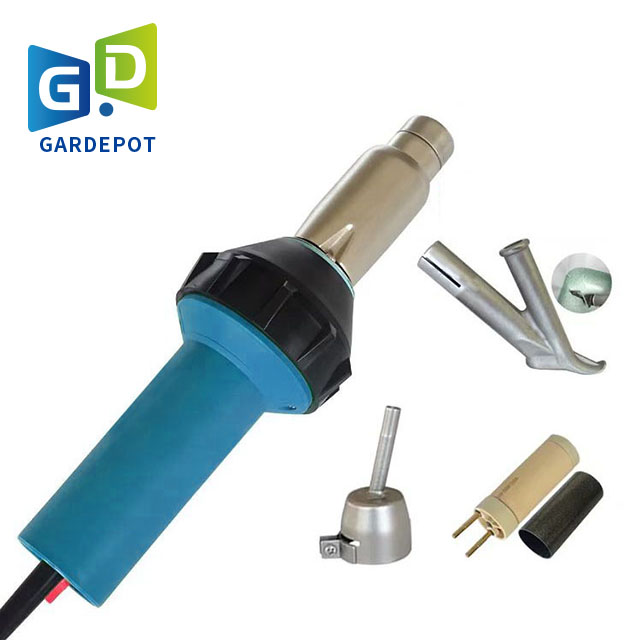
The hot wedge welder is a cornerstone in geomembrane welding technology, prized for its precision and durability. Designed to join thermoplastic liners such as HDPE, LLDPE, and PVC, this welder uses a heated wedge to melt the overlapping material edges simultaneously, creating a seamless and leak-proof bond.
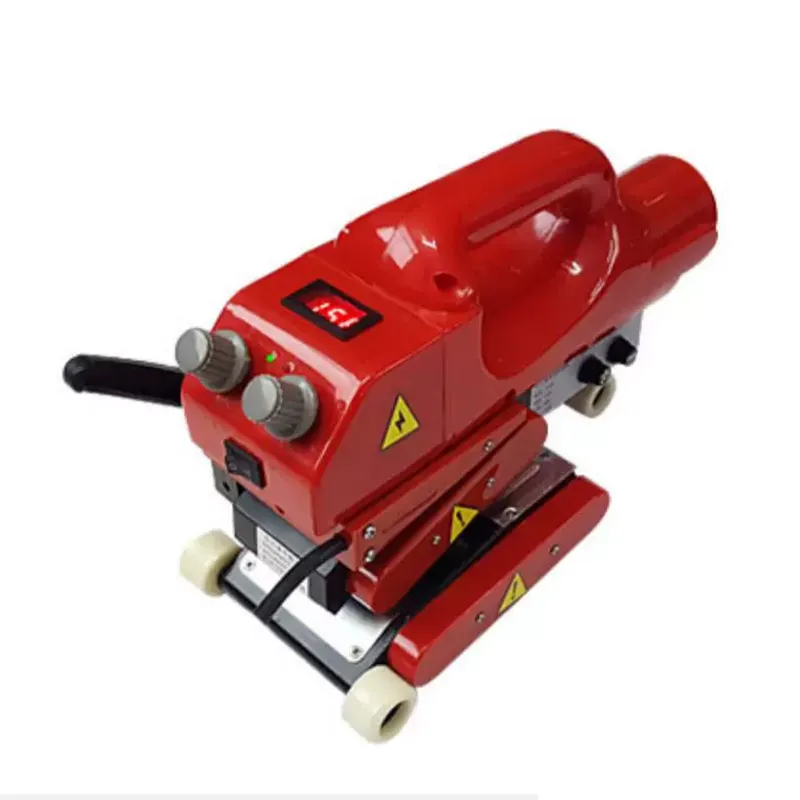
Ideal for landfill liners, pond liners, and containment systems, the hot wedge welder ensures uniform heat distribution and consistent pressure, which are critical for achieving high-quality seams. Its operation minimizes the risk of material degradation or overheating, which can compromise the integrity of the weld.
Portability and ease of use make the hot wedge welder a favorite among environmental engineers and field technicians. Modern units often feature digital controls for temperature and speed, allowing operators to adapt to different membrane thicknesses and site conditions effectively.
Using a hot wedge welder means faster installation times and enhanced seam strength, essential for meeting regulatory standards and extending the service life of geomembrane installations.
Reliable Pond Liner Welder for Aquaculture and Agricultural Projects
The pond liner welder is specially designed to handle flexible geomembranes used in water retention for agricultural ponds, fish farms, and irrigation reservoirs. With the ability to produce tight, durable seams, this machine prevents costly water leakage and contamination.
Pond liner welder models often incorporate adjustable temperature settings and pressure controls to accommodate a range of liner materials and thicknesses. This versatility ensures optimal welding on delicate PVC sheets as well as more robust HDPE liners.
Field technicians appreciate the lightweight construction and ergonomic design of many pond liner welder units, which enable long welding runs without excessive fatigue. Some models include automated speed control, allowing welds to be completed with greater consistency and less operator error.
Investing in a professional pond liner welder not only secures water containment but also improves overall project efficiency and cost-effectiveness in agricultural and environmental applications.
Why Choose a Wedge Welder for Your Geomembrane Projects?
The wedge welder offers distinct advantages over other welding techniques like hot-air welding or extrusion welding. By employing a heated wedge, this welder provides direct contact heat that penetrates both layers of the geomembrane simultaneously, creating an exceptionally strong and homogeneous bond.
The simplicity of the wedge welder mechanism translates into fewer moving parts and lower maintenance, resulting in reduced downtime and operational costs. It also offers superior control over weld parameters, such as temperature and welding speed, which can be finely tuned for different materials and thicknesses.
Because the wedge welder heats the membranes from the inside out, it produces less surface oxidation and maintains the physical properties of the geomembrane better than alternative methods. This leads to longer-lasting seams that resist cracking, peeling, and water infiltration.
For environmental engineers, construction contractors, and liner installers, the wedge welder is the go-to machine for reliable, repeatable, and high-quality geomembrane seams.
Innovative Triad Wedge Welder for Industrial-Grade Geomembrane Welding
The triad wedge welder represents the next generation in wedge welding technology, offering enhanced precision and performance for demanding projects. Featuring three heating elements arranged in a triangular configuration, this welder ensures even greater heat distribution and faster welding speeds.
Ideal for thick or multilayer geomembranes, the triad wedge welder excels in applications such as landfill capping, mining liners, and industrial wastewater containment. Its robust design allows for continuous operation in harsh environments while maintaining consistent seam strength.
Equipped with advanced digital controls, the triad wedge welder provides real-time feedback on temperature, pressure, and welding speed. This allows operators to quickly adjust settings for different liner materials, thicknesses, or environmental conditions, minimizing errors and improving overall quality.
By incorporating a triad wedge welder into your toolkit, you gain a powerful ally for large-scale projects requiring speed, efficiency, and uncompromising seam integrity.
Versatile Wedge Welding Machine for All Your Liner Sealing Needs
The wedge welding machine is a versatile and indispensable tool for anyone working with geomembranes. Whether you are welding landfill liners, pond liners, or general containment membranes, this machine adapts to the job with ease.
Available in manual, semi-automatic, and fully automatic configurations, the wedge welding machine can be tailored to meet specific project requirements. Manual units offer portability and control for small jobs, while automated models provide high productivity for large-scale industrial applications.
Key features of a modern wedge welding machine include adjustable speed and temperature, ergonomic handles, and durable construction to withstand tough job site conditions. Many also come with safety features like thermal cutoffs and pressure sensors to ensure operator protection and weld consistency.
Using a wedge welding machine minimizes material waste, reduces seam failure rates, and speeds up project completion times. It is the preferred choice for contractors seeking reliable and efficient geomembrane sealing solutions.
Pond liner welder FAQs
What is the main advantage of a hot wedge welder over other welding methods?
The hot wedge welder offers direct heat application to both membrane layers simultaneously, producing stronger and more uniform seams. It reduces oxidation and material degradation compared to hot-air welders, resulting in longer-lasting welds.
Can a pond liner welder handle different materials?
Yes, most pond liner welder machines are adjustable to weld various thermoplastic membranes, including HDPE, PVC, and LLDPE. The ability to adjust temperature and pressure allows them to accommodate different thicknesses and material types.
How does the triad wedge welder improve welding quality?
The triad wedge welder uses three heating elements arranged in a triangle to provide more uniform heat distribution. This results in faster weld speeds and stronger seams, especially beneficial for thick or multilayer geomembranes used in heavy-duty applications.
Is the wedge welding machine suitable for fieldwork?
Absolutely. Many wedge welding machines are designed to be portable and rugged, allowing easy transport and use on uneven terrain. They often feature ergonomic designs and simple controls to facilitate efficient field operation.
What maintenance does a wedge welder require?
Regular maintenance includes cleaning heating wedges to prevent residue buildup, checking and replacing worn pressure rollers, calibrating temperature sensors, and inspecting electrical components. Proper upkeep ensures consistent weld quality and prolongs machine life.