Small fasteners can make a significant difference in the reliability of mechanical assemblies. In automotive components, industrial machinery, metal brackets, and equipment housings, flange bolts offer a practical combination of threaded fastening and an integrated bearing surface. Their built-in flange helps distribute clamping pressure over a wider area than a comparable bolt head without a flange, depending on the contact surfaces and joint design. For engineers, maintenance professionals, and industrial purchasing teams, understanding the differences between M6 flange bolt lengths helps ensure that each fastener matches the assembly's dimensional and performance requirements.

M6 x 16mm Flange Bolt for Space-Constrained Installations
The M6 x 16mm flange bolt is a compact metric fastener designed for applications requiring an M6 thread and a nominal bolt length of 16 mm. It can be suitable for selected brackets, equipment covers, mounting plates, and compact mechanical assemblies where the available fastening depth is limited.
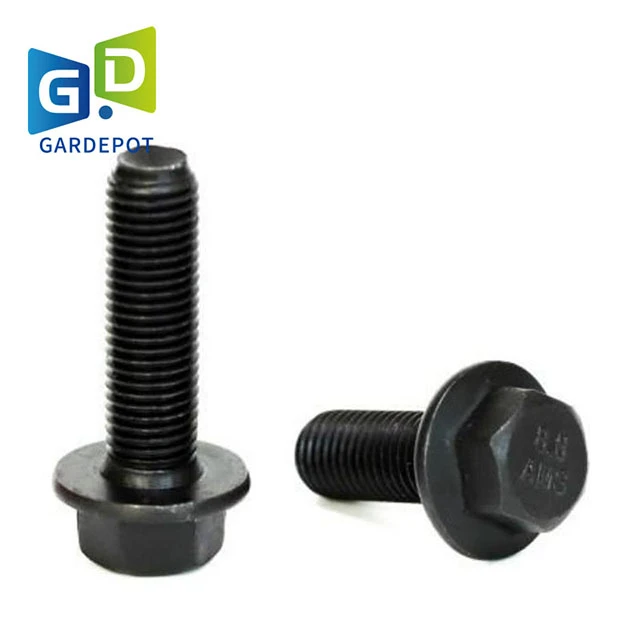
The integrated flange forms a wider bearing surface beneath the bolt head. Depending on the design, this can reduce localized contact pressure and help the bolt seat securely against the connected component. Because the flange is built into the fastener, a separate washer may not be necessary in some applications. However, washer requirements depend on the joint specification, surface condition, and load distribution needs.
For equipment manufacturers, the 16 mm length may be appropriate when fastening relatively thin components or joining parts with limited available thread depth. Buyers must distinguish between the nominal bolt length and the total length of the fastener. For standard flange bolts, the stated length is generally measured from beneath the head to the end of the bolt, but the relevant product standard should always be checked.
Material selection also influences suitability. Carbon steel flange bolts are widely used in general machinery, while stainless steel versions may be preferred in environments where corrosion resistance is important. The required strength grade should be determined by the assembly's design rather than assumed from the bolt's dimensions.
When sourcing M6 x 16mm flange bolts, procurement teams should confirm thread pitch, head dimensions, flange diameter, material grade, and surface finish. These details help ensure compatibility with existing components and reduce installation problems during production or maintenance.
M6 x 20mm Flange Bolts for Versatile Equipment Assembly
M6 x 20mm flange bolts provide an additional 4 mm of nominal length compared with the 16 mm option. This difference can be useful when an assembly includes thicker mounting plates, additional brackets, or a greater required thread engagement.
In industrial equipment, this length may be considered for fastening guards, machine housings, support brackets, and selected structural components that use M6 threaded connections. It can also be relevant to automotive accessory assemblies and maintenance applications where the original equipment specification calls for a 20 mm fastener.
Selecting the correct length requires measuring the combined thickness of the components being joined and checking the available threaded hole depth or nut engagement. A bolt that is too short may not provide the specified engagement, while an excessively long bolt can bottom out in a blind hole or interfere with internal parts.
The flange design can help simplify installation by combining the bolt head and bearing surface in one component. Nevertheless, a flange bolt should not automatically be treated as a locking fastener. If an assembly is exposed to vibration, movement, or repeated loading, the engineer may need to specify an appropriate locking feature, thread-locking method, or other retention system.
For bulk purchasing, consistency between batches is important. Variations in thread dimensions, coating thickness, or flange geometry can affect installation and compatibility with automated assembly tools. Buyers should request technical drawings or product specifications when sourcing replacement fasteners for established production lines.
A supplier quotation should identify the exact M6 x 20mm configuration, including material, strength grade, finish, and applicable standard. This makes it easier to compare products accurately and avoid confusion between similar-looking fasteners.
M6 x 25mm Flange Bolt for Greater Fastening Reach
The M6 x 25mm flange bolt offers a longer fastening profile for applications where additional reach is required. Compared with M6 x 16mm and M6 x 20mm versions, its extra length can accommodate thicker component stacks or provide the required engagement in compatible assemblies.
Potential applications include equipment mounting systems, selected machinery brackets, fabricated metal components, and maintenance work involving thicker materials. The actual suitability depends on the connection design, the strength of the materials, and the specified fastening requirements.
A longer bolt does not necessarily create a stronger joint. Fastening performance depends on several factors, including bolt grade, thread engagement, tightening torque, joint stiffness, and the properties of the connected components. In a blind threaded hole, buyers must also confirm that the bolt will not reach the bottom before the joint is properly clamped.
The flange's contact area should be compatible with the surface beneath the bolt head. On soft materials, painted surfaces, or components with limited bearing strength, the designer may need to consider surface deformation or a different fastening arrangement. For critical joints, follow the applicable engineering specification instead of selecting a bolt based on length alone.
Industrial maintenance teams should also pay attention to corrosion protection. A plated carbon steel bolt may be suitable for many indoor environments, whereas stainless steel or another specified finish may be needed for certain outdoor or humid conditions. Material compatibility and service exposure should guide the final selection.
For distributors, stocking M6 x 25mm flange bolts alongside shorter lengths can support customers with different assembly requirements. Clear labeling by length, grade, and finish helps prevent incorrect substitutions and simplifies inventory management.
Comparing M6 Flange Bolt Lengths and Technical Specifications
Choosing between 16 mm, 20 mm, and 25 mm lengths starts with the actual dimensions of the assembly. The following comparison provides a simple purchasing reference.
Specification | M6 x 16mm | M6 x 20mm | M6 x 25mm |
Nominal thread diameter | 6 mm | 6 mm | 6 mm |
Nominal length | 16 mm | 20 mm | 25 mm |
General consideration | Compact assemblies | Intermediate fastening reach | Thicker component stacks |
Main selection factor | Available depth | Required engagement | Clearance and hole depth |
These descriptions are general guidelines, not substitutes for product drawings or engineering specifications. Thread pitch, flange dimensions, bolt grade, and head design may vary between product standards and manufacturers.
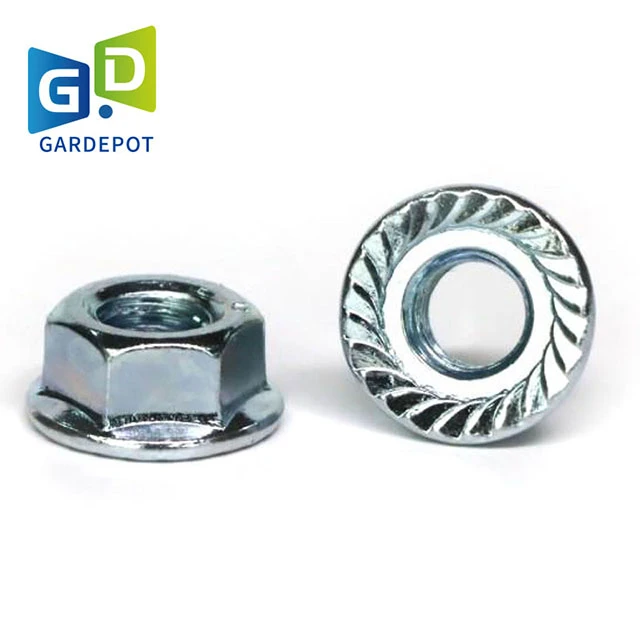
Before ordering, confirm whether the required thread is coarse or fine, whether the flange is serrated or plain, and whether a particular coating is needed. Serrated flange bolts may provide additional resistance to loosening in suitable applications, but they can also affect the mating surface. Their use should be compatible with the assembly requirements.
For repeat purchases, retaining the original product specification can make replenishment more efficient. This is especially useful for manufacturers operating several assembly lines or distributors managing multiple fastener sizes.
How to Source Quality M6 Flange Bolts for Business Needs
Reliable sourcing begins with a complete product specification. Instead of requesting only an M6 flange bolt, buyers should identify the length, thread pitch, material, strength grade, flange design, surface finish, and order quantity.
Manufacturers and wholesale distributors should also evaluate dimensional consistency, inspection procedures, packaging, and delivery capability. For specialized applications, requesting samples before committing to a large order can help verify fit and installation performance.
When comparing quotations, consider the total procurement cost rather than unit price alone. Consistent quality, accurate labeling, dependable lead times, and compatibility with existing components can all influence operating efficiency.
Whether your project requires an M6 x 16mm flange bolt for compact equipment, M6 x 20mm flange bolts for general assembly, or an M6 x 25mm flange bolt for greater fastening reach, matching the fastener to the actual joint design is essential. Clear specifications and a dependable supplier help maintain assembly quality while reducing purchasing errors and unnecessary replacement costs.