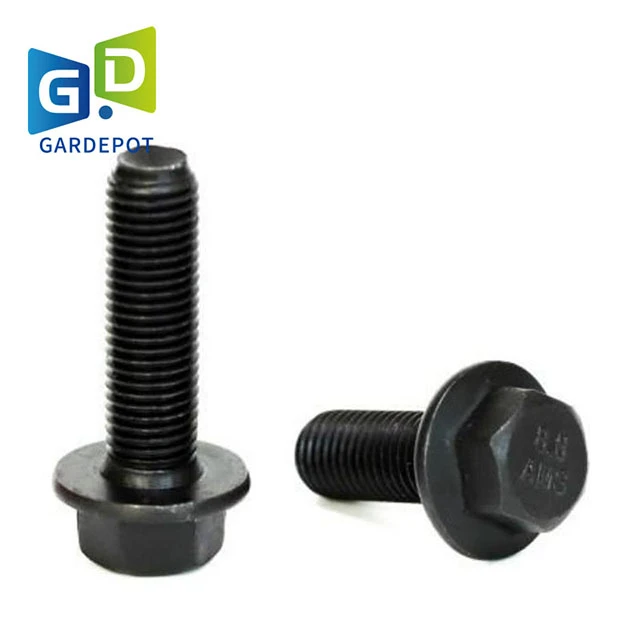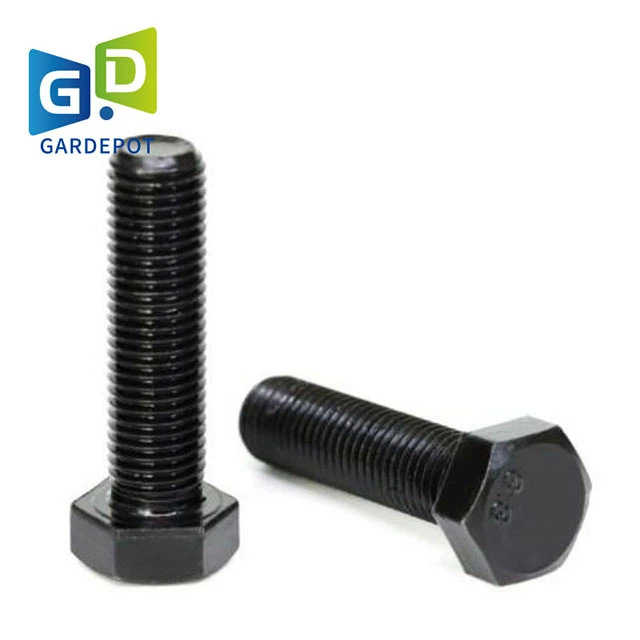
Hex bolts are essential fastening components in machinery manufacturing, automotive assembly, construction, metal fabrication, and equipment maintenance. Their hexagonal heads provide a convenient gripping surface for tightening, while their threaded shafts allow them to form secure connections with compatible nuts or internally threaded components. Although hex bolts may look similar at first glance, differences in thread pitch, diameter, length, material, and strength grade can significantly affect their suitability for a specific application.
For buyers working with inch-based fastener specifications, understanding thread design is particularly important. Terms such as 1/4-24 hex bolt and 1/4-28 hex bolt describe different thread configurations, while 1/4 hex bolt is a broader size-related search term that may require additional specifications. Knowing how these designations differ helps engineers, distributors, and purchasing teams avoid compatibility issues and select the right fastening products.

1/4-24 Hex Bolt for Specialized Threading Requirements
A 1/4-24 hex bolt refers to a fastener with a nominal diameter of 1/4 inch and 24 threads per inch. The thread count is an important part of the specification because it determines how the bolt engages with a matching nut or threaded hole. Before purchasing this type of fastener, buyers should confirm that the mating component uses the same thread designation.
Thread compatibility is essential for achieving proper assembly. Even when two bolts share the same nominal diameter, different thread pitches cannot normally be used interchangeably. An incorrect thread combination may cause resistance during installation, damage the mating threads, or prevent the connection from reaching its intended clamping condition. For this reason, checking the technical drawing or existing fastener specification is recommended before placing an order.
A 1/4-24 hex bolt may be considered for specialized mechanical assemblies, equipment components, and maintenance applications where the corresponding thread specification is required. Its hexagonal head supports installation with standard wrenches or sockets, making it practical for applications where controlled tightening and convenient maintenance are important.
Material selection should also be evaluated according to the working environment. Carbon steel options may be suitable for many general fastening requirements, while stainless steel can be considered where corrosion resistance is a priority. Surface finishes, strength grades, and dimensional tolerances should be confirmed based on the intended use.
For industrial buyers, a clear product specification helps suppliers identify the correct fastener. Providing the nominal diameter, threads per inch, required length, head dimensions, and material information can reduce the risk of ordering an incompatible product.
1/4-28 Hex Bolt for Precision Mechanical Connections
A 1/4-28 hex bolt has a nominal diameter of 1/4 inch and 28 threads per inch. Compared with a 1/4-24 configuration, it has a finer thread pitch. This distinction can influence how the fastener engages with the mating component and makes accurate thread identification especially important during product selection.
Fine-thread fasteners are used in applications where the engineering design specifies their particular thread characteristics. Depending on the assembly, they may offer more precise adjustment through smaller axial movement per rotation than a coarser thread. They can also be suitable for certain compact mechanical connections where the matching threaded components are designed around the same specification. However, the appropriate thread type must always be determined by the application rather than assuming that a finer pitch is universally better.
The 1/4-28 hex bolt is relevant to selected machinery, automotive components, equipment assemblies, and repair work. In these applications, correct thread engagement helps maintain a stable connection and supports consistent assembly procedures. Buyers should also check bolt length, thread length, material grade, and installation requirements to ensure the fastener meets the design specification.
Another consideration is the relationship between thread pitch and the operating environment. Assemblies exposed to vibration, repeated loading, or temperature changes may require additional joint-design measures. Depending on the application, engineers may specify locking nuts, thread-locking compounds, or other approved retention methods. These measures should be selected as part of the complete fastening design.
When sourcing 1/4-28 hex bolts, buyers should request accurate product data and confirm the applicable dimensional standard. A dependable supplier should be able to clarify thread specifications, material options, available finishes, and inspection requirements.
1/4 Hex Bolt Selection for Different Industrial Applications
The keyword 1/4 hex bolt generally describes a hex bolt with a nominal diameter of 1/4 inch, but it does not provide enough information to identify a complete fastener specification. The thread pitch, bolt length, material, strength grade, and surface treatment must also be established before selecting a suitable product.
In manufacturing environments, 1/4-inch hex bolts may be used to secure brackets, covers, mounting plates, machine components, and equipment housings. Their relatively compact diameter makes them useful for assemblies designed around smaller fastening points. The hexagonal head also allows straightforward installation and removal during maintenance or component replacement.
For construction and metal fabrication, the correct bolt length is important. The selected fastener must pass through the connected materials and provide the required thread engagement without creating unnecessary protrusion. Buyers should consider the thickness of each component, the use of washers, and the specifications of the mating nut or threaded hole.
Material and finish selection should reflect the working conditions. Stainless steel may be appropriate for certain moisture-exposed environments, while coated carbon steel can be considered for other applications requiring surface protection. For load-bearing connections, mechanical properties and engineering requirements should take priority over appearance or price.
Because the term 1/4 hex bolt can refer to several different configurations, buyers should avoid ordering based on diameter alone. Confirming the complete specification with the manufacturer helps ensure compatibility with the intended assembly and reduces the possibility of installation problems.
How to Source the Right Hex Bolt from a Professional Manufacturer
Choosing a reliable hex bolt manufacturer involves evaluating both product quality and the supplier's ability to meet specific technical requirements. A professional manufacturer should provide clear information about available diameters, thread pitches, lengths, materials, surface treatments, and applicable standards.
Before requesting a quotation, buyers should prepare a complete specification. This may include the nominal diameter, threads per inch, bolt length, head dimensions, material grade, finish, and required quantity. Drawings, samples, or reference standards can also help suppliers understand the exact product needed. For recurring orders, keeping these specifications consistent supports better inventory management and reduces the risk of variations between batches.
Quality control is another important factor. Depending on the product and applicable requirements, inspections may cover dimensional accuracy, thread conformity, material properties, hardness, and surface finish. Buyers handling large-volume procurement may also request samples and relevant inspection documentation before confirming production.
In addition, a supplier's production capacity, packaging arrangements, lead times, and export experience can affect the overall purchasing process. Clear communication is especially valuable when ordering customized or non-standard fasteners.
Ultimately, selecting between a 1/4-24 hex bolt, a 1/4-28 hex bolt, and other 1/4-inch hex bolt configurations requires accurate identification of the complete thread and dimensional specifications. By confirming these details and working with an experienced supplier, buyers can obtain fasteners that match their assembly requirements and support reliable industrial connections.